
Snowboard Binding Entry Technology
Published 8th Apr 2026
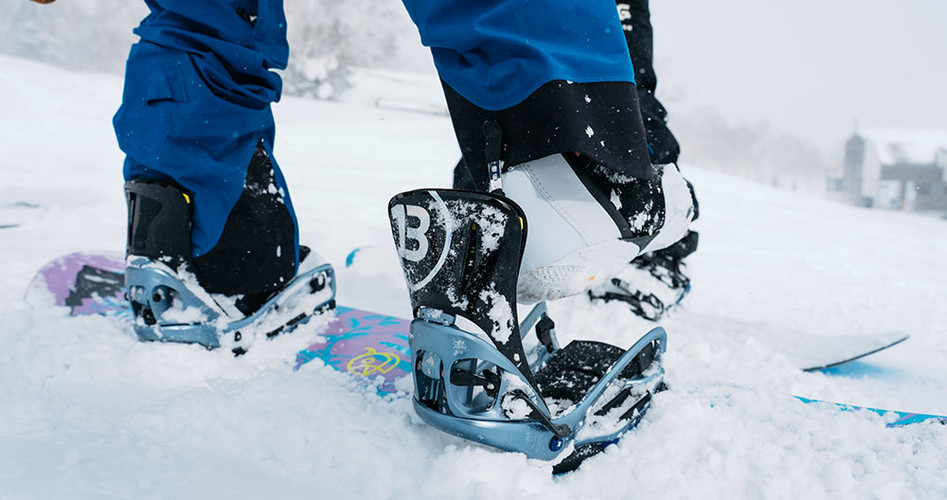
Whether you’re learning the ropes or you can hold your own through the steep and deep, we begin a run the same way: stepping into our bindings. How this looks depends on the binding. The following is a breakdown of entry systems and how they connect you to your board. There’s the classic strap approach, or the time and energy saving alternatives, each uniquely getting your boots onboard.
SNOWBOARD BINDING ENTRY TECHNOLOGY
Buying Guide
If you’re shopping for snowboard bindings and are feeling a little lost, a great place to start is our Buying Guide.
Whether you’re learning the ropes or you can hold your own through the steep and deep, we begin a run the same way: stepping into our bindings. How this looks depends on the binding. The following is a breakdown of entry systems and how they connect you to your board. There’s the classic strap approach, or the time and energy saving alternatives, each uniquely getting your boots onboard.
In terms of boot compatibility, seek out sizing info provided by the brands or included on our product pages, make sure you select a binding size to fit your boot size—better yet try your boot in the binding. Another important note: bindings with straps are compatible with traditional snowboard boots. *Strapless bindings require the corresponding boots, built to lock into the system.
TRADITIONAL BINDINGS
Highback Bindings w/ Dual Straps: You have likely seen these bindings and how they work but here’s a rundown.
Traditional Bindings are good for those who appreciate the performance and response of two straps, people who favour being physically strapped to their board, someone who prefers to sit down entering their binding, individuals who are especially rough with their gear, or even anyone who needs a good colour match as there are the most options in this category. No judgment here, we love a matching kit! These are a classic for a reason and no amount of research & development in the following will eliminate the traditional binding.
HOW IT WORKS
With the highback up, step your foot onto the baseplate and attach the strap by feeding the ladder through the buckle. Tighten the strap via the buckle ratchet, making the teeth climb down the ladder until you’re securely strapped in. Repeat for each strap.
QUICK LINKS
HOW IT WORKS
With the highback up, step your foot onto the baseplate and attach the strap by feeding the ladder through the buckle. Tighten the strap via the buckle ratchet, making the teeth climb down the ladder until you’re securely strapped in. Repeat for each strap.
QUICK LINKS
TRADITIONAL BINDINGS
Highback Bindings w/ Dual Straps: You have likely seen these bindings and how they work but here’s a rundown.
Traditional Bindings are good for those who appreciate the performance and response of two straps, people who favour being physically strapped to their board, someone who prefers to sit down entering their binding, individuals who are especially rough with their gear, or even anyone who needs a good colour match as there are the most options in this category. No judgment here, we love a matching kit! These are a classic for a reason and no amount of research & development in the following will eliminate the traditional binding.
QUICK ENTRY WITH STRAPS
These quick entry options are compatible with traditional snowboard boots. Each have straps variably resembling traditional bindings including ratcheting buckles. Made to set-and-forget but they also open like regular straps by releasing the buckles from the ladders. This means these options offer both a quick-entry function and allow for a traditional-style entry or exit when needed.
FLOW
Flow’s rear-entry bindings led the pack introducing the world to a universally compatible quick entry snowboard binding.
The strap on this design is a singular harness with two buckles which you can set to fit your boot, then enter and exit through the highback. To use the rear-entry you will need to be on flat or on your toe edge. Flow Bindings have come a long way since the mid-90s and gone through many updates and innovations.
HOW IT WORKS
This binding system involves a hinged highback which is released by flipping a lever and cables, opening the binding to slip your boot in from the back. With your boot in place lift the highback and flip the lever up to secure the binding.
SUPERMATIC
The first hands-free-entry snowboard binding that works with any traditional boot. The Supermatics feature a unique system allowing you to simply step in and go.
Supermatics have the quickest entry of strap options, after stepping in there’s no additional closure. At the time of writing, this is one of the heavier bindings which could be a concern for some, for others it’s a minor trade off for the speed of entry! They can be as quick to lock in as strapless binding systems.
HOW IT WORKS
When opened the highback reclines, the straps lift, and the heel of the baseplate rises into a stirrup. Slide your boot into the straps then step your heel down automatically flipping up the highback and closing the straps to your presets. To exit press the release lever on the inner-heel-side of the binding while stepping out.
SHOP SUPERMATIC BINDINGS
FASE
This is the newest style speed-entry binding to hit the market. The FASE binding has the same look, feel, and performance of a traditional two-strap.
The ankle strap can be completely separated when needed, just with a little more force than a traditional strap. It is the least bulky of the universally compatible quick-entry bindings but may be a more difficult angle to enter. FASE is offered by a few different brands and have already been worn in competition by some winning pros.
HOW IT WORKS
In open mode the highback tilts back and the ankle strap on an extended ladder is open wide but stays linked by a stopper. Insert your boot through the open strap automatically closing the highback and catch the toe strap. From there it takes one hand to buckle down the ankle strap. Removing your foot works in the opposite way. Release the ankle strap to the stopper, bend your knee and raise your heel dropping the highback and lift your boot out.
These options might take some tweaking of the straps to nail down the settings for a goldilocks combination of easily inserting your boot plus maximum response while ripping. Once the settings are dialed these systems can speed up time between the lift and the run which means more time on your board! These technologies offer riders a quick-entry binding without forcing limitations on boot selection.
QUICK ENTRY WITH STRAPS
These quick entry options are compatible with traditional snowboard boots. Each have straps variably resembling traditional bindings including ratcheting buckles. Made to set-and-forget but they also open like regular straps by releasing the buckles from the ladders. This means these options offer both a quick-entry function and allow for a traditional-style entry or exit when needed.
FLOW
Flow’s rear-entry bindings led the pack introducing the world to a universally compatible quick entry snowboard binding.
The strap on this design is a singular harness with two buckles which you can set to fit your boot, then enter and exit through the highback. To use the rear-entry you will need to be on flat or on your toe edge. Flow Bindings have come a long way since the mid-90s and gone through many updates and innovations.
HOW IT WORKS
This binding system involves a hinged highback which is released by flipping a lever and cables, opening the binding to slip your boot in from the back. With your boot in place lift the highback and flip the lever up to secure the binding.
FLOW
Flow’s rear-entry bindings led the pack introducing the world to a universally compatible quick entry snowboard binding.
The strap on this design is a singular harness with two buckles which you can set to fit your boot, then enter and exit through the highback. To use the rear-entry you will need to be on flat or on your toe edge. Flow Bindings have come a long way since the mid-90s and gone through many updates and innovations.
HOW IT WORKS
This binding system involves a hinged highback which is released by flipping a lever and cables, opening the binding to slip your boot in from the back. With your boot in place lift the highback and flip the lever up to secure the binding.
SUPERMATIC
The first hands-free-entry snowboard binding that works with any traditional boot. The Supermatics feature a unique system allowing you to simply step in and go.
Supermatics have the quickest entry of strap options, after stepping in there’s no additional closure. At the time of writing, this is one of the heavier bindings which could be a concern for some, for others it’s a minor trade off for the speed of entry! They can be as quick to lock in as strapless binding systems.
HOW IT WORKS
When opened the highback reclines, the straps lift, and the heel of the baseplate rises into a stirrup. Slide your boot into the straps then step your heel down automatically flipping up the highback and closing the straps to your presets. To exit press the release lever on the inner-heel-side of the binding while stepping out.
SUPERMATIC
The first hands-free-entry snowboard binding that works with any traditional boot. The Supermatics feature a unique system allowing you to simply step in and go.
Supermatics have the quickest entry of strap options, after stepping in there’s no additional closure. At the time of writing, this is one of the heavier bindings which could be a concern for some, for others it’s a minor trade off for the speed of entry! They can be as quick to lock in as strapless binding systems.
HOW IT WORKS
When opened the highback reclines, the straps lift, and the heel of the baseplate rises into a stirrup. Slide your boot into the straps then step your heel down automatically flipping up the highback and closing the straps to your presets. To exit press the release lever on the inner-heel-side of the binding while stepping out.
SHOP SUPERMATIC BINDINGS
FASE
This is the newest style speed-entry binding to hit the market. The FASE binding has the same look, feel, and performance of a traditional two-strap.
The ankle strap can be completely separated when needed, just with a little more force than a traditional strap. It is the least bulky of the universally compatible quick-entry bindings but may be a more difficult angle to enter. FASE is offered by a few different brands and have already been worn in competition by some winning pros.
HOW IT WORKS
In open mode the highback tilts back and the ankle strap on an extended ladder is open wide but stays linked by a stopper. Insert your boot through the open strap automatically closing the highback and catch the toe strap. From there it takes one hand to buckle down the ankle strap. Removing your foot works in the opposite way. Release the ankle strap to the stopper, bend your knee and raise your heel dropping the highback and lift your boot out.
These options might take some tweaking of the straps to nail down the settings for a goldilocks combination of easily inserting your boot plus maximum response while ripping. Once the settings are dialed these systems can speed up time between the lift and the run which means more time on your board! These technologies offer riders a quick-entry binding without forcing limitations on boot selection.
STRAPLESS STEP-IN
These bindings will only function with the corresponding boots. Because there are no straps, connection relies on boot components mounting to the bindings. Due to the mount activating via step, entry can be made hands-free. Pulling a lever is required for release but locking in can be done without bending over.
BURTON STEP ON
This is a system engineered and developed by Burton, now offered and tweaked by additional brands. Step On bindings strictly function with Step On Boots and vice versa.
This is a quick system to learn that many boarders have become loyal to. They offer a fast, smooth entry, and one of the lightest bindings out there. Step On has become the most widely recognized quick-entry system with both boots and bindings available in a large variety of styles, stiffness, and colours.
HOW IT WORKS
There are three connection points between the boot and binding, one above the heel and two at either side of the toe. Step heel-first, clipping the heel cleat into the highback. Follow with the toes stepping down to snap the cleats into the toe hooks. To get out pull the lever on the external heel-side of the binding while lifting your heel and step off.
*Step On boots include a clip above the heel cleat to keep snowpants out of the way. Release DOES NOT WORK if fabric is jammed in. Use this clip as a simple solution preventing major dysfunction.
This is a system engineered and developed by Burton, now offered and tweaked by additional brands. Step On bindings strictly function with Step On Boots and vice versa.
This is a quick system to learn that many boarders have become loyal to. They offer a fast, smooth entry, and one of the lightest bindings out there. Step On has become the most widely recognized quick-entry system with both boots and bindings available in a large variety of styles, stiffness, and colours.
HOW IT WORKS
There are three connection points between the boot and binding, one above the heel and two at either side of the toe. Step heel-first, clipping the heel cleat into the highback. Follow with the toes stepping down to snap the cleats into the toe hooks. To get out pull the lever on the external heel-side of the binding while lifting your heel and step off.
*Step On boots include a clip above the heel cleat to keep snowpants out of the way. Release DOES NOT WORK if fabric is jammed in. Use this clip as a simple solution preventing major dysfunction.
MORE STEP ON OPTIONS
K2 CLICKER
Clicker bindings have reemerged though they debuted in the 90s. This binding is strictly compatible with Clicker Boots, though the boot appears similar to traditional, they are ultimately built for the Clicker and will not shred strapped in a binding.
Clickers are the least common of speed-entry bindings due to lack of marketing, not lack of function. Currently they are not a widely available option.
HOW IT WORKS
The mounting points are two metal cleats, one under the ball of the foot and one below the heel. When stepping in hook your toe into the eye on the binding followed by stepping your heel down to trigger the latch locking the boot to the binding. A lever releases the heel lock to allow exit.
K2 CLICKER
Clicker bindings have reemerged though they debuted in the 90s. This binding is strictly compatible with Clicker Boots, though the boot appears similar to traditional, they are ultimately built for the Clicker and will not shred strapped in a binding.
Clickers are the least common of speed-entry bindings due to lack of marketing, not lack of function. Currently they are not a widely available option.
HOW IT WORKS
The mounting points are two metal cleats, one under the ball of the foot and one below the heel. When stepping in hook your toe into the eye on the binding followed by stepping your heel down to trigger the latch locking the boot to the binding. A lever releases the heel lock to allow exit.
K2 CLICKER
Clicker bindings have reemerged though they debuted in the 90s. This binding is strictly compatible with Clicker Boots, though the boot appears similar to traditional, they are ultimately built for the Clicker and will not shred strapped in a binding.
Clickers are the least common of speed-entry bindings due to lack of marketing, not lack of function. Currently they are not a widely available option.
HOW IT WORKS
The mounting points are two metal cleats, one under the ball of the foot and one below the heel. When stepping in hook your toe into the eye on the binding followed by stepping your heel down to trigger the latch locking the boot to the binding. A lever releases the heel lock to allow exit.
Strapless snowboard bindings require the boot and binding combination which raises the cost of entry if you are swapping systems. With no straps in the way these are the most efficient binding from lift to run. Strapless bindings may pose as an option for people with limited flexibility or other ability differences that don’t allow the actions involved with strap bindings. The speed and accessibility make these bindings an important development in snowboard binding technology.
SO, WHAT'S THE TAKEAWAY?
Consider what factors are most important to you. This might include performance, convenience, weight, accessibility, boot compatibility, colour, etc. Systems with many components result in a hefty binding, in contrast to a minimal and lightweight choice. Some people want two-strap performance, while others prioritize saving time and getting straight to riding. The quick-entry systems have riders standing to engage, that’s what makes it quick! A beginner might struggle with balance and enjoy the ability to sit and strap in. For others, the positions required to buckle-up straps might be inaccessible making a strapless step-to-connect system their best option to board.
When shopping for a new-to-you entry system, demoing the binding is a good idea if possible. You can visit us in-store to see them in person and chat with our knowledgeable staff or reach out if you have a question. Even do a search online for videos and reviews to get the idea of their function. Changing tech might feel strange or tricky at first, but with regular use you’ll be getting in and out with ease.
There are plenty of snowboard bindings available for you to choose from whether you’re happy with what you know or looking to experience the latest innovations. We hope they help you have your best days on the slopes, happy shredding!